A climate contribution is one of those terms that sounds simple but means very different things in practice. At its best, it is a genuine, measurable investment in a project that supports decarbonisation, regenerative land use, or ecosystem restoration. At its worst, it is a generic offset bought off a shelf with little connection to the buyer or to any meaningful environmental outcome.
The difference matters. For any business serious about its net zero journey, where you invest your climate contribution reflects how seriously you take the rest of your strategy.
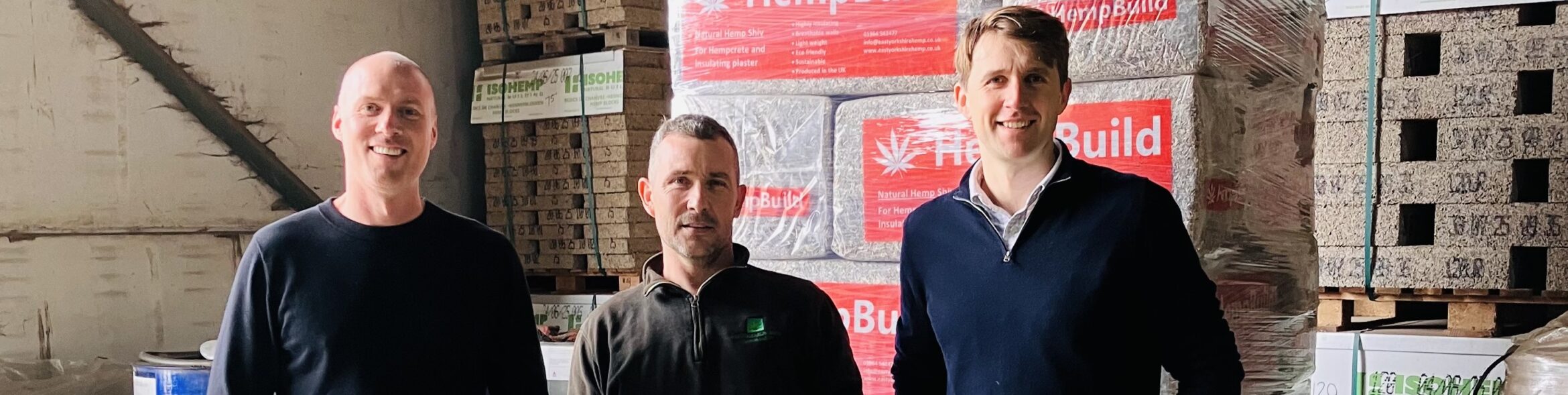
Last week, we visited a project that sits firmly at the credible end of that spectrum, alongside our client Hatmill.
A Yorkshire hemp farm with national reach
East Yorkshire Hemp (K.J. Voase & Sons) has been farming hemp since 2002 and is now the UK’s largest hemp processor. The family-run business combines generations of farming expertise with modern sustainability practices, and the work happening on the ground is genuinely innovative.
Nick Voase kindly showed Aaron Thomas from Hatmill and Flotilla’s Pete Kirby around the farm. From the fields of newly planted seedlings to the storage sheds stacked high with processed bales, it was a useful reminder of just how much practical activity sits behind a single line item in a climate contribution report.
Every part of the hemp crop is used:
- Hemp fibre is used in loft insulation and sustainable textile applications
- Hemp shiv supports animal bedding and hempcrete building materials
- Biomass briquettes, made from processing residues, work as an alternative biofuel
Alongside the products themselves, the farm integrates cover crops, organic fertilisers and carbon monitoring to support soil health and long-term carbon storage. East Yorkshire Hemp is also part of Innovate UK’s £6 million Centre for High Carbon Capture Cropping project, contributing to ongoing research into soil carbon capture and sustainable farming methods.
Why this matters for Hatmill’s net zero journey
Hatmill is a logistics and supply chain consultancy and one of our clients, working toward net zero emissions by 2039. As a fully remote business operating an electric vehicle fleet, the bulk of their operational emissions come from unavoidable business travel while supporting clients across the UK.
Their 2025 Climate Contribution Strategy is designed to compensate for those unavoidable emissions through investment in credible, measurable projects. This year, that has included nearly £4,000 directed toward East Yorkshire Hemp and similar initiatives.
The point of visiting projects like this is not just due diligence (though that matters too). It is about staying connected to the work, understanding what your investment is actually supporting, and being able to talk about it credibly afterwards.
What credible climate contribution looks like
If you are thinking about climate contributions as part of your own net zero approach, a useful test is whether you could comfortably explain the project to someone outside your business. Can you describe what it does, where the money goes, and why it matters? Can you point to measurable outcomes, or at least credible research?
For us, the projects worth backing tend to share a few common features. They are practical and measurable, with clear environmental outcomes. They sit alongside, rather than instead of, genuine emissions reduction within the business. They contribute to wider innovation, research or regional impact. And the story behind them stands up to scrutiny.
East Yorkshire Hemp meets all of these. Hatmill’s approach to climate contributions reflects the same standards, and visits like last week’s are part of how that credibility is maintained.
Thinking about how to make your own climate contributions more credible? We’d love to help. Contact us